A system for real-time observations of aeroallergens

Next-generation bioaerosol monitoring across Europe

SYLVA supports the development of next-generation technologies and infrastructure to better understand how bioaerosols are changing in response to environmental and climate factors.


Explore Demonstration Pilots
Data Portal
Visit Stakeholder Hub
Loading station status…

Understanding Bioaerosols

Bioaerosols are airborne biological particles such as pollen, fungal spores, bacteria, viruses, and fragments of plant or animal material. They are naturally present in the atmosphere and play important roles in ecosystems, climate processes, agriculture, and human health.

Bioaerosols can trigger allergies and respiratory diseases, influence cloud formation as well as air quality, and cause significant damage to important agricultural crops. Climate change, land-use changes, and air pollution are altering the distribution, seasonality, and concentration of bioaerosols across Europe.

Improved monitoring of bioaerosols is thus essential to better understand and predict their impacts on health, ecosystems, and the environment.

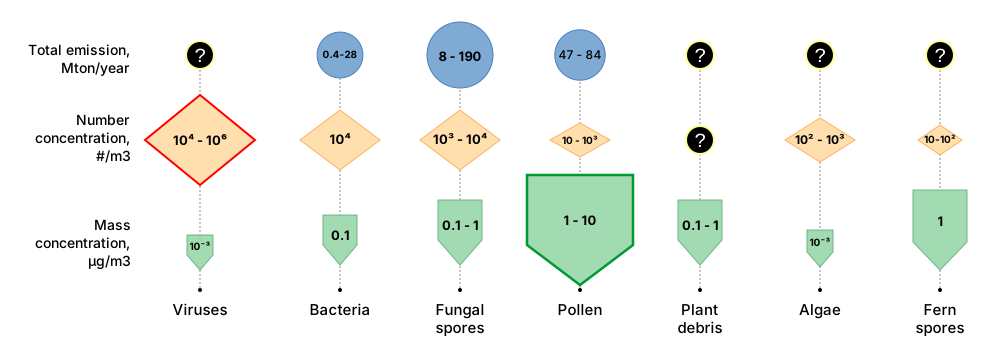
Bioaerosol types and concentrations

Monitoring Bioaerosols Under Extreme Conditions

SYLVA demonstration pilots evaluate monitoring technologies under diverse environmental stress conditions across Europe, including cold and humid northern regions, high-altitude alpine environments, and hot, dust-influenced southern regions.

Northern Europe

Cold, humid, and supersaturated environments

Where: Pallas, Kuopio, Helsinki (FI)

Conditions

  • Sub-zero temperatures
  • High humidity and supersaturation

Key Particles

  • Bacteria and fungi
  • Pollen
  • Sea salt
  • Airborne ice and mist

Challenge

Freezing, condensation, and low pollen levels affect measurements.

Focus

Improving detection in cold climates and handling ice and moisture.

High-Altitude Regions

Extreme and rapidly changing atmospheric conditions

Where: Jungfraujoch (CH), Schneefernerhaus (DE)

Conditions

  • Low pressure
  • Strong winds
  • Intense radiation
  • Icing

Key Particles

  • Pollen, e.g. Betula and Alnus
  • Cloud droplets
  • Ice crystals

Challenge

Rapid shifts in temperature and humidity stress measurement systems.

Focus

Ensuring reliable performance under low pressure and in-cloud conditions.

Southern Europe

Hot, dry, and dust-influenced environments

Where: Córdoba (ES), Potenza (IT), Novi Sad (RS)

Conditions

  • Heat and drought
  • Saharan dust
  • Air pollution

Key Particles

  • Pollen, e.g. Olea
  • Invasive species
  • Fungal spores
  • Dust aerosols

Challenge

High pollution can alter particles and reduce detection accuracy.

Focus

Adapting instruments to high temperatures and dense aerosol loads.

Building the Next Generation of Bioaerosol Monitoring

A growing number of automatic bioaerosol monitors are connected to the SYLVA infrastructure and deliver real-time data. Raw data from these sites can be downloaded directly from the SYLVA data portal and real-time bioaerosol concentrations downloaded from the EBAS website.

Data Portal EBAS